Union Minister for Road Transport and Highways Nitin Gadkari announced on Wednesday that the country will adopt the Multi-Lane Free Flow (MLFF) toll system and AI-driven highway management technology by the end of 2026. This initiative aims to eradicate waiting times at toll plazas, significantly enhancing highway travel.
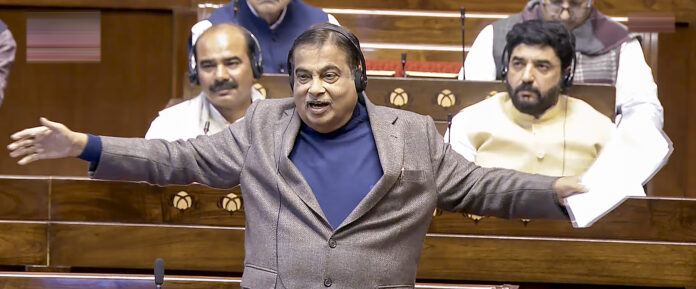
During the Rajya Sabha’s Question Hour, the Minister addressed various queries, confirming that the new tolling system relies on advanced artificial intelligence, satellite technology, and automated number plate recognition. This innovation will facilitate uninterrupted vehicle movement, allowing them to cross toll stations without halting.
“With the implementation of MLFF, commuters will no longer need to stop at toll plazas. Vehicles will maintain speeds up to 80 km per hour,” Gadkari stated. He emphasized that this modern system will replace the existing FASTag mechanism.
The Minister elaborated on the previous toll payment durations, which ranged from three to ten minutes, reduced to under a minute with FASTag. “FASTag significantly boosted our revenue, adding approximately ₹5,000 crore to our toll income. The MLFF system will provide an even more efficient facility, aiming for zero waiting time,” he explained.
Furthermore, Gadkari highlighted the economic advantages of this system, projecting a fuel savings of ₹1,500 crore and an increase in government revenue by ₹6,000 crore. He assured that toll theft and revenue leakage will be entirely eliminated under the new system.
“We aim for full completion of this project by 2026. The MLFF will eradicate toll theft and enhance transparency, ensuring convenience for all commuters,” Gadkari assured parliamentarians.
Additionally, the Minister asserted that this AI-enabled technology would notably reduce travel time and bolster overall efficiency along national highways. He clarified that the central government holds responsibility solely for national highways and does not govern state highways or city roads, areas often misrepresented in discussions circulating on social media.
“We are committed to creating a system that is transparent, efficient, and free from corruption,” Gadkari stated, reinforcing the government’s dedication to modernising road infrastructure.
This announcement marks a pivotal move toward enhancing India’s highway landscape and ensuring smoother travel experiences for millions of road users nationwide. The implementation of the MLFF toll system signals a future where technology and efficiency dominate India’s transportation sector.