
The cold wave continued across Jammu and Kashmir on Tuesday as clear night skies led to a further dip in minimum temperatures, with Srinagar recording minus 4.9 degrees Celsius, the lowest overnight temperature in the Valley.
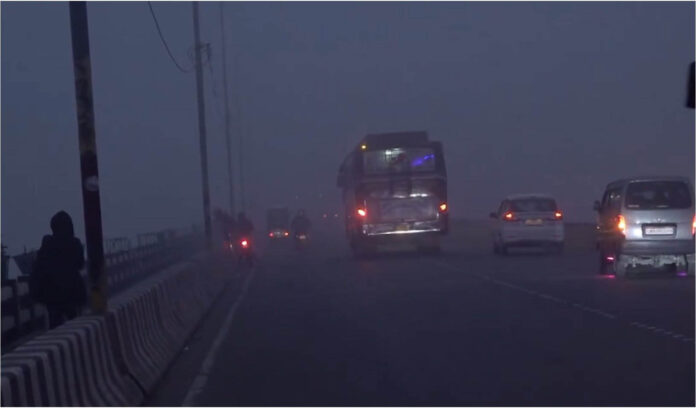
In Jammu city, dense morning fog severely affected daily life, leading to the suspension of both surface and air traffic due to extremely poor visibility.
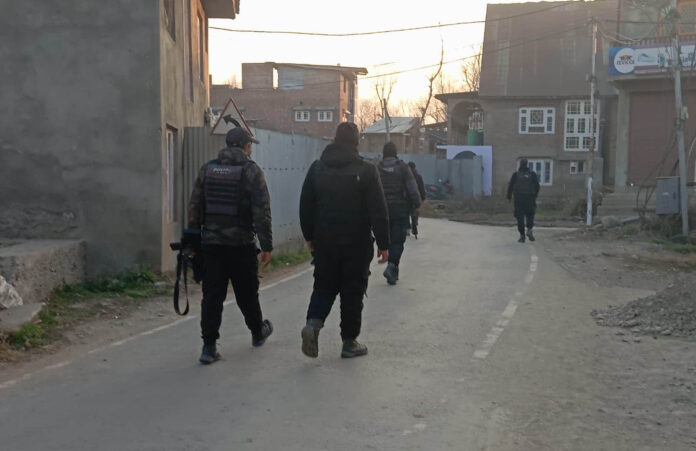
In Srinagar, only a few residents ventured outdoors early in the morning as harsh, icy winds swept into the Valley from the surrounding mountain ranges, intensifying the chill.
With no major snowfall forecast over the next week, officials said the bitter winter cold is likely to persist.
According to the Meteorological Department, Gulmarg recorded a minimum temperature of minus 3.5 degrees Celsius, while Pahalgam was colder at minus 6.2 degrees.
In the Jammu region, Jammu city recorded 3.8 degrees Celsius, Katra 6.2, Batote 4.1, Banihal 8.9, and Bhaderwah minus 0.2 degrees as the night’s lowest temperatures.
Weather Forecast
The Meteorological Department (MeT) said partly to generally cloudy weather is expected on January 18 and 19.
“On January 20, generally cloudy weather with light rain or snowfall at isolated places is likely. Between January 21 and 23, partly to generally cloudy weather with light rain or snow at scattered places is expected,” the department said.
From January 24 to 25, the weather is expected to remain partly cloudy across the Union Territory.
The MeT Department also issued an advisory stating that a gradual rise in minimum temperatures is expected at many locations.
“Moderate fog over the plains of the Jammu division, with dense fog at isolated places, is likely to continue during the next five days,” the advisory said.
Concerns Over Prolonged Dry Spell
Meanwhile, the forecast of mostly cold and dry weather till January 25 has raised concerns, particularly in the Kashmir Valley.
The ongoing dry spell has triggered alarm as water bodies critical for agriculture, horticulture and drinking water depend heavily on heavy snowfall during ‘Chillai Kalan’, the 40-day-long harsh winter period.
Chillai Kalan, which began in late December, is already more than halfway through, yet the plains of the Valley have not witnessed the season’s first snowfall.
Chillai Kalan ends on January 30. Officials noted that snowfall in February and March is of limited benefit, as it melts quickly and fails to adequately recharge perennial water reservoirs in the mountains.