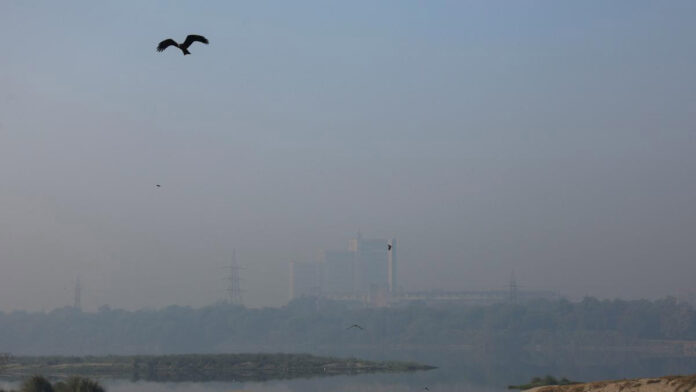
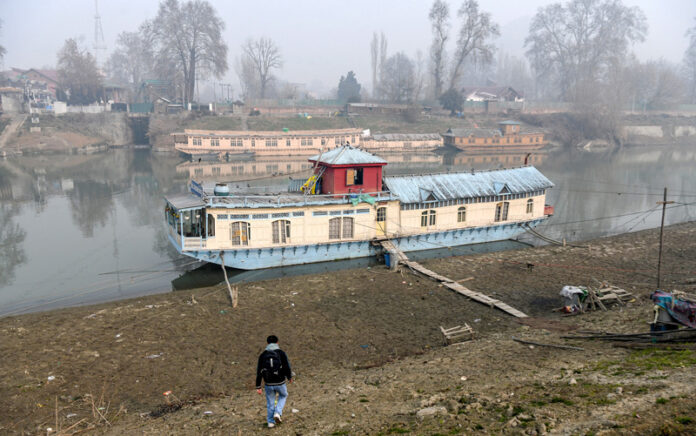
Kashmir’s prolonged dry spell has reduced the water level of the Jhelum River to its lowest point in recent years, triggering concerns among residents over potential shortages in irrigation and drinking water supply.
At Sangam, the key gauging station in South Kashmir, the river level has plunged to 0.56 feet, exposing wide stretches of the dry riverbed. At Munshi Bagh, the level stood at 3.59 feet, officials said.
Dry Spell Since October, 85.8% Rainfall Deficit
Chief Engineer, Irrigation & Flood Control, Showkat Hussain, told Excelsior that the continuous dry conditions since October have severely impacted water flow.
“The river’s level at Sangam is 0.56 feet, while Munshi Bagh is at 3.59 feet. The reduced intake of water is exerting pressure on irrigation and drinking water supply schemes dependent on the Jhelum,” he said.
Jammu and Kashmir is currently witnessing a massive 85.8% rainfall deficit, with almost no precipitation recorded since November 5, despite the region’s normal requirement of 43.1 mm during this period.
No Immediate Drinking Water Crisis, Say Officials
Authorities clarified that despite falling river levels, drinking water supply remains stable in major areas.
“Regions like Sopore and Baramulla that receive water from Wular Lake have not reported disruptions,” an official said.
Wular acts as a natural reservoir, releasing water gradually to meet downstream needs.
No Major Weather Activity Expected Till Dec 19
Director of the Meteorological Department, Dr. Mukhtar Ahmad, said no significant weather system is likely to affect the region until December 19.
“Unless a new western disturbance arrives, the current dry conditions are expected to continue,” he added.
The persistent dry spell has raised concerns about long-term impacts on agriculture, horticulture, and the region’s overall water security.