The Congress party on Thursday reaffirmed its commitment to resist any efforts aimed at widening the scope of post-facto environmental clearances. This declaration comes in the wake of a significant Supreme Court ruling that reinforced the necessity for prior environmental approvals.
On Wednesday, the Supreme Court invalidated the 2021 office memorandum that allowed for retrospective environmental clearances. The court’s ruling emphasized that administrative orders cannot modify essential environmental protections.
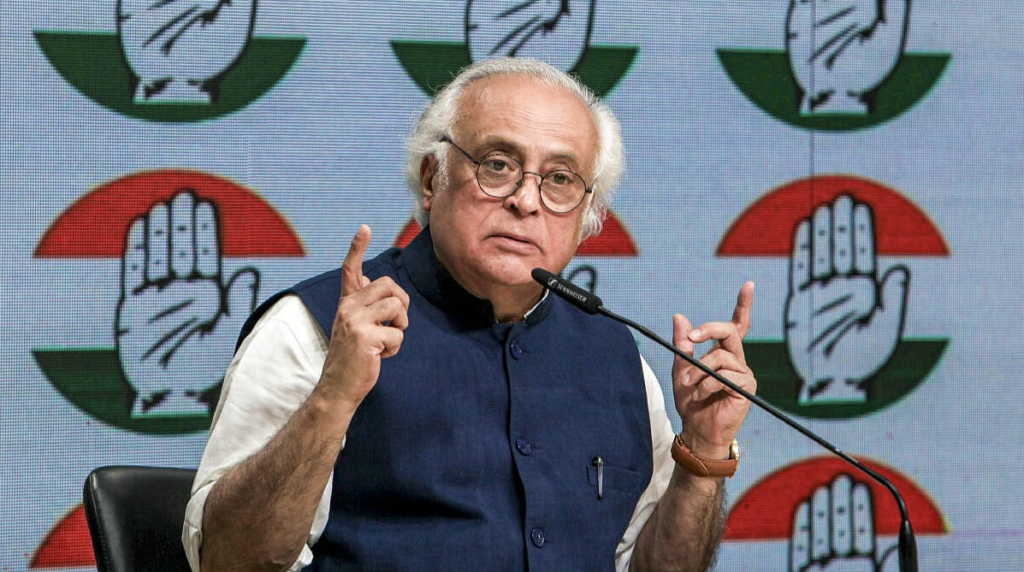
Former environment minister and Congress leader Jairam Ramesh highlighted the importance of the Supreme Court’s decision. He pointed to the landmark judgment delivered by a two-judge bench in May 2025, asserting that prior environmental clearance is mandatory.
Ramesh stated, “The mechanisms established by the 2017 Notification and the 2021 Office Memorandum rewarded illegality and undermined the Environmental Impact Assessment (EIA) process.” He noted that these actions violated the fundamentals of sustainable development and the right to a clean environment.
The Congress leader criticized the Union Government for seeking a review of the milestone judgment. He claimed that the government argued the ruling would jeopardize numerous projects. However, he expressed concern that questioning the judgment in an open court marked a troubling precedent.
Justice Ujjal Bhuyan cautioned against the concept of ex-post facto environmental clearance, declaring such approvals incompatible with environmental law. Ramesh interpreted the Supreme Court’s recent ruling as a significant reaffirmation of essential environmental safeguards.
Nevertheless, Ramesh warned that the new ruling still allows the government to design a statutory framework for post-facto environmental clearances in ‘exceptional circumstances’. This opens the door for a potentially broad interpretation of what constitutes ‘exceptional’.
The Congress party has long championed the cause of environmental conservation. Ramesh noted that communities across states like Great Nicobar, Odisha, and Chhattisgarh have continually opposed the recurring pattern of governments treating environmental regulations as mere hurdles.
“For the past 17 years, I have stood with concerned citizens to oppose actions that dilute India’s environmental protections,” Ramesh asserted. He reiterated the party’s intention to fight any attempts to expand post-facto environmental clearances.
A unanimous verdict from a bench comprising Chief Justice Surya Kant and Justices Joymalya Bagchi and Vipul M Pancholi confirmed that the ruling applies prospectively. This decision safeguards ongoing projects that previously received retrospective environmental clearances from facing punitive actions.
The Supreme Court underscored the government’s authority under the Environment (Protection) Act, 1986, allowing for the creation of amnesty schemes for projects that failed to obtain prior clearances. These include several notable initiatives, like the AIIMS Medical College and Hospital in Odisha and the Centre of Excellence for Cancer Diseases in Tamil Nadu.
The Supreme Court’s decision was predominantly rooted in considerations of legal certainty and public interest. The bench acknowledged the complex balance of protecting the environment while also facilitating development necessary for a burgeoning population.
Quoting insights on the environmental responsibility, the bench highlighted the need for interventions that reflect a balance between environmental rights and development ambitions, emphasizing Gandhi’s perspective on resource usage.
As the Congress party pushes forward, it plans to take a proactive stance on environmental law, ensuring that ecological integrity remains a priority in policy discourse.