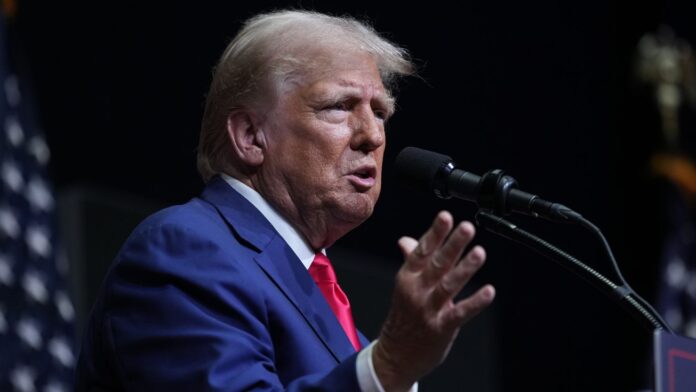
In a significant development, President Donald Trump has suspended “Project Freedom,” which aimed to escort ships through the strategically crucial Strait of Hormuz. This decision comes as Trump cites progress in negotiations with Iran for a comprehensive peace agreement. The announcement came on Tuesday via a post on Truth Social.
Trump stated, “Great progress has been made toward a complete and final agreement with representatives of Iran.” He elaborated that the pause in the project, which initially launched on Monday, aims to assess the feasibility of finalizing the peace deal.
“Based on the request of Pakistan and other countries, the tremendous military success we have had during the campaign against Iran, and the progress in negotiations, we agreed to temporarily pause Project Freedom,” Trump added. While the naval blockade will continue, this pause reflects a shift towards diplomatic resolution.
Project Freedom commenced on Monday with the intention to escort ships trapped due to fears of Iranian hostility. As one of the pathways transporting a critical fraction of the world’s oil supply, the Strait of Hormuz remains a focal point of international maritime safety.
However, tensions escalated in the region as reports emerged of Iranian attacks on vessels. The UAE claimed its ships were targeted by Iran, leading to U.S. military actions that destroyed several Iranian small boats.
Hours after Trump’s announcement, U.S. Secretary of State Marco Rubio confirmed the completion of Operation Epic Fury, initiated on February 28. He declared, “We achieved the objectives of that operation,” emphasizing a preference for peace over conflict during a White House press conference.
Rubio highlighted that Project Freedom’s objectives included rescuing nearly 23,000 civilians from 87 nations trapped in the Persian Gulf. He clarified the operation’s defensive nature, stating, “This is not an offensive operation. There’s no shooting unless we’re shot at first.”
The prospect of an agreement with Iran carries weighty implications not only for the U.S. and Iran but also for global oil markets and regional stability. Many analysts remain skeptical about the durability of any potential deal, given Iran’s historical reluctance to yield in negotiations.
As the region braces for further developments, the U.S. administration’s strategic pivot towards diplomatic engagement could reshape the narrative surrounding U.S.-Iran relations. The evolving situation will be closely monitored in the coming weeks, especially regarding the ongoing humanitarian concerns in the Gulf.
Experts suggest that the pause in Project Freedom is a calculated move that reflects a nuanced approach to international diplomacy. “Engagement over confrontation often paves the way for lasting peace,” noted international relations expert Dr. Anjali Mehta.
While the diplomatic route may appear fraught with challenges, the optimism surrounding the potential for a peaceful resolution underscores a critical turning point in this protracted conflict. Trump’s administration intends to balance military readiness with the pursuit of a diplomatic breakthrough with Iran.