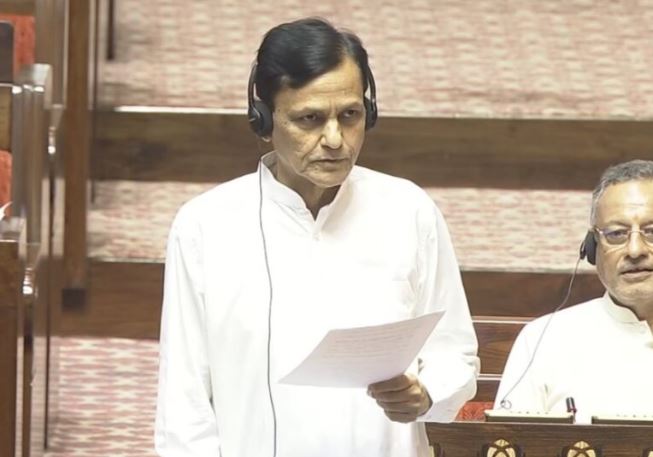
Law enforcement agencies in Delhi have arrested 254 foreign nationals linked to drug trafficking since 2024, with a staggering ₹40.53 crore worth of narcotics seized, according to the government’s statement to the Lok Sabha on Tuesday. These measures align with India’s commitment to combat increasing drug-related activities.
In a detailed account rendered by Minister of State for Home Affairs, Nityanand Rai, it was disclosed that Delhi Police arrested individuals from various nationalities, prominently including Nigerians, across multiple locations such as Khanpur Extension, Deoli, and Sangam Vihar. These areas have seen heightened law enforcement activity due to their association with drug trafficking.
The arrests are part of a broader crackdown on illegal narcotics, illustrating a focused strategy to manage crime within the National Capital Region (NCR). The year-wise breakdown reveals that authorities apprehended 40 foreign nationals in 2024, followed by 35 in 2025, and a further 15 in the first half of 2026.
The operations led to substantial seizures, comprising heroin, cocaine, amphetamine, MDMA, methamphetamine, and more, with cumulative values recorded at ₹12.75 crore for 2024, ₹14.27 crore in 2025, and ₹13.50 crore in the interim of 2026.
Moreover, the report highlighted that 103 foreign nationals were located in rented accommodation without proper tenant verification, which has triggered actions against 63 landlords. Regular tenant verification remains a priority for Delhi Police to ensure public safety.
In line with the government’s stringent “Zero Tolerance” approach to drug trafficking, Rai emphasized progressive strategies the Narcotics Control Bureau (NCB) is implementing. This includes an intelligence-led initiative leveraging technology to effectively dismantle drug trafficking networks that exploit online platforms, encrypted messaging applications, and the darknet.
The minister outlined the engagement of cybersecurity experts to probe narcotics transactions operating on the darknet, bringing in much-needed expertise to combat this sophisticated crime. In tandem, the vision document on narcotics control calls for the establishment of dedicated Darknet and Cryptocurrency Cells within Anti-Narcotics Task Forces to utilize AI-enabled analytics and advanced technologies.
The NCB is collaborating with entities like the US Drug Enforcement Administration in specialized training programs that cover digital forensics, darknet monitoring, and cryptocurrency investigations. This holistic approach is designed to adapt to the evolving tactics employed by traffickers.
Rai revealed that the vision document outlines a three-year strategy committed to a “Whole-of-Government” and “Whole-of-Society” approach. This framework encompasses a series of initiatives aimed at strengthening financial investigations, boosting international cooperation, and enhancing the operational capabilities of the Narco-Coordination Centre.
To further bolster support, the government has launched the 24×7 MANAS national narcotics helpline for swift intervention and assistance. Additionally, the promotion of a Mission Drug-Free Campus aims to rid educational institutions of drug-related influences.
As Delhi intensifies its efforts to combat drug trafficking, experts agree that a multi-faceted strategy involving technological advancements and community engagement is crucial. The stringent measures implemented by the government signal a stronger resolve to protect citizens and maintain law and order in the National Capital Region.